

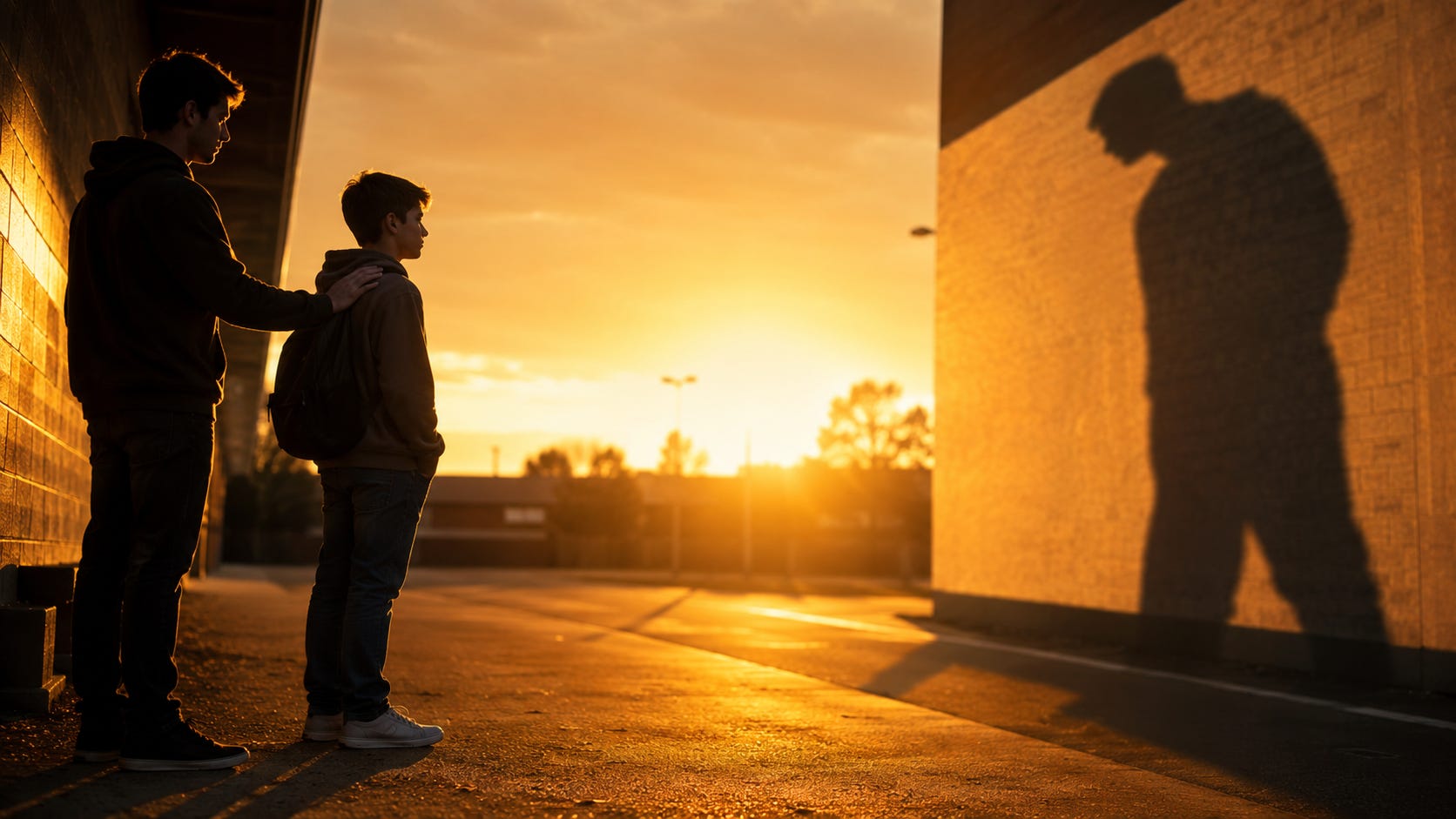
Back in junior high, there was this kid in my neighborhood who made my life a living nightmare.
He wasn’t particularly smart or funny or popular. What he had was size. And when you’re that age, size is like a silent authority that doesn’t need a reason for anything. The rest of us were still figuring out how to walk without tripping over our own feet, and he seemed like he’d been born fully grown.
His name was Kapon. And he had a gift for zeroing in on the one person least likely to fight back. Most of the time, that person was me.
There were plenty of afternoons I wished my older brother were around. He was a lot older than me, so by the time I was hitting junior high, he was already out of the house. He’d swing by now and then, but for the most part, he lived in a world that didn’t include me. That absence bugged me more than I realized at the time. Or at least, that’s what I told myself.
The Brother I Talked About
People who are not around can leave a lot of space for imagination. Whenever my friends and I were hanging around with nothing better to do, I’d somehow steer the conversation to my brother. I’d mention the places he’d been. The languages he spoke. None of what I talked about was made up, but let’s just say I did a lot of enthusiastic editing. The kind only a younger sibling can pull off.
Over time, my brother became this local legend. But legends have a problem. People start wondering if they’re real. Some of my friends believed me. Others didn’t. A few treated him like a fictional character I’d invented to make up for something. Honestly, I couldn’t blame them. They’d never seen him. Then one afternoon, they finally did.
Under the Tree
Like most big moments at that age, it happened while we were doing absolutely nothing. A bunch of us were hanging out under this tree across from my house–our usual spot when we had nowhere else to go. The conversation was drifting, like it always did, when Kapon showed up.
He walked into the group with that kind of swagger that says he’d never once considered the possibility that things might not go his way. That day, for reasons I still don’t know, he decided I was the target.
He started speaking to me in Spanish. I didn’t understand a word, but language wasn’t necessary. His tone carried everything. Whatever he was saying wasn’t meant to be understood. It was meant to establish his position. The longer he talked, the more he seemed to enjoy himself. Then something shifted.
The laughter stopped. Kapon was still talking, but because everyone stopped looking at him. One by one, they turned their heads past me. I spun around and saw my brother was crossing the street.
The Demonstration
He wasn’t running. He wasn’t angry. He just walked across the street like he’d always been part of the scene. When he reached us, he stopped beside me and looked at Kapon.
Then he spoke. Fluent Spanish. Not classroom Spanish. Not the hesitant, half-remembered kind. The kind that instantly changes the energy of a conversation before anyone has time to react.
I couldn’t understand a single word, but I understood Kapon. The change was instant. A minute earlier, he was in total control. Now, he looked like someone who had walked into a room and realized the rules had changed while he wasn’t paying attention.
Behind him, my friends stood frozen. For years, they’d heard versions of this person. Now he was right in front of them, and the reality of him was somehow more unsettling than anything they’d imagined.
What I Missed All Those Years
As my brother kept talking, Kapon’s whole posture crumbled. His shoulders sagged. His eyes dropped to the ground–suddenly, his shoes seemed to have rapidly become the most interesting thing in the world. The confidence he’d walked in with had nowhere to go.
I remember feeling something I didn’t quite understand at the time: a quiet, almost ridiculous sense of satisfaction. Don’t get me wrong, I loved every second of my brother taking him down a notch or two. But what hit me harder was that everyone else was finally seeing what I’d been trying to explain all along, in ways I didn’t have the right words for yet.
When it was over, my brother looked at me. “We good?” he asked. I nodded, like I was saying, “Yeah, I got it from here.”
He turned, crossed the street, and walked back inside as casually as if he’d just stepped out to grab the mail.
I looked at Kapon straight in the eye and said, flat as could be: “He knows karate. You’re lucky he didn’t kick your ass.”
For a few seconds, nobody said a word. Then everyone started talking at once. “You never told us he spoke Spanish.” “How many languages does he know?” “Where did he learn that?” They were all trying to piece together what they’d just witnessed, as if understanding it after the fact could somehow undo the way it had thrown them off balance.
As I listened, something clicked that I hadn’t seen before. For years, I told myself I resented my brother for not being around. And in a lot of ways, I did. When you’re young, absence becomes the thing you remember about a person. But what I hadn’t realized was how much of that absence had been filled with something else. Admiration.
I’d spent years talking about him while missing him at the same time. Frustrated that he wasn’t there, but quietly fascinated by the life he was living without me.
Without even noticing, I’d built him into something bigger than presence or absence could explain. He was someone I missed. And someone I was still trying to understand.
And I only understood that after a bully, a language I couldn’t follow, and an afternoon under a tree forced everything into view at once.