

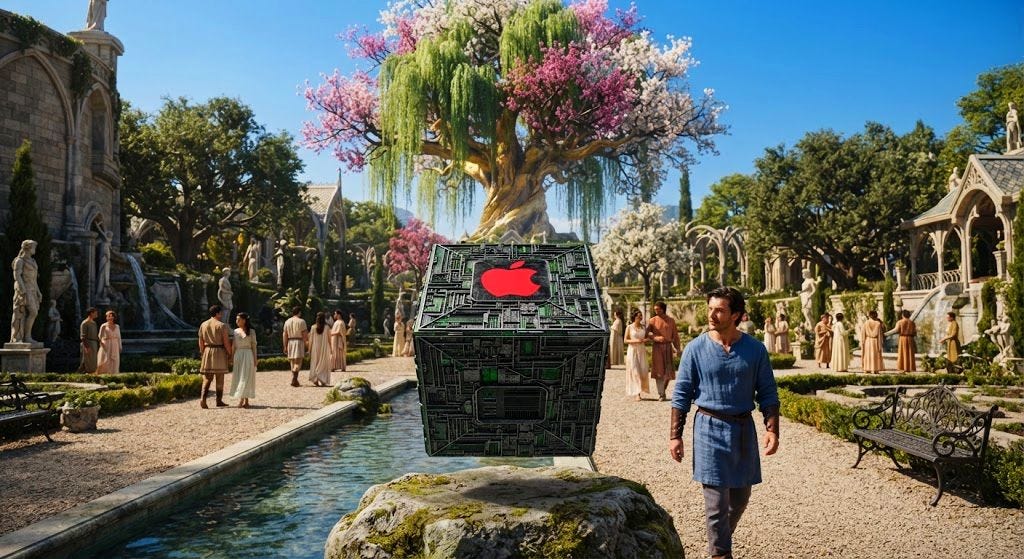
I can stand in a bank line without reaching for my phone. I will put off a vacation until I have saved enough to pay for it, and I have trained myself to think twice before making a large purchase simply because I want something. I had spent years treating patience, restraint, and frugality as evidence of the kind of person I was.
That confidence makes it especially easy to judge people who seem impatient, impulsive, or incapable of delaying gratification. We see someone spend money they should have saved, buy something they do not need, or surrender to an impulse, and congratulate ourselves for possessing the virtues they apparently lack. Then something happens that makes the whole arrangement less comfortable: we encounter something we genuinely want, and desire arrives carrying an argument.
I had found something I wanted, and worse, I had a perfectly reasonable justification for buying it. My desire had dressed itself in technical specifications, market conditions, and practical considerations. It looked less like temptation than a decision.
The Principle
In most situations, especially when I am the one paying, I prefer chicken parm to filet mignon. “Although filet mignon is perfectly good, I find it difficult to justify paying a premium when a less expensive meal will satisfy me almost as well and leave money in my pocket for something else. My mother has never missed an opportunity to point this out, and whenever I bring a girl home, she eventually finds a way to embarrass me in front of her.
“He’s very cheap,” she says, putting the emphasis on “cheap.” Personally, I prefer “budget-conscious.”
For years, I regarded that frugality as a principle. I waited, compared prices, and resisted the emotional rush that arrives when something crosses the invisible boundary between “interesting” and “mine.” When the temptation has little relevance to what I actually want or need, those principles are easy to experience as permanent qualities of character rather than choices that still have to be made.
There is something recognizably Stoic about that instinct. In Letter 18, Seneca recommends deliberately spending several days living with very little so that a person can discover whether the deprivation he fears is actually frightening once he experiences it. The exercise was meant to make a person less dependent on comfort and less vulnerable to Fortune, rather than to turn poverty into a virtue.
I had never thought of my frugality as a Stoic exercise, but I had been performing something similar without realizing it. I believed that waiting was virtuous, and I had quietly added another belief underneath it: waiting would eventually pay off. If I resisted the impulse today, I expected tomorrow to reward me with a better price, a better opportunity, or at least the satisfaction of knowing I had not been foolish.
I had treated delayed gratification like an investment account: deposit discomfort today and collect a better outcome later. The problem was that the future does not owe me interest. Waiting may produce a better deal; it may also bring a higher price, a missed opportunity, or simply more information.
That assumption had never really been tested. Then I found something I genuinely wanted, and suddenly my principle had an adversary.
The Desire
I had been experimenting with engineering local AI agents for quite a while, and my computer’s 8GB of VRAM was becoming a serious limitation. With help from several fellow Substack writers, I had managed to squeeze considerably more performance out of my existing hardware, but optimization could only go so far. Eventually the problem stopped being software and became a hardware constraint.
That was the first serious crack in my fortress. I had spent years telling myself that expensive technology was usually unnecessary, and now I had a legitimate technical problem that made new hardware relevant. The Mac mini required a more specific comparison than a generic price-performance chart because the particular machine I was considering offered a combination of unified memory, performance, power efficiency, and local-AI capability that was unusually well matched to what I wanted to do.
My old chicken-parm-versus-filet-mignon comparison had therefore become more complicated. I was no longer looking at five grades of steak and choosing the cheapest one that would satisfy me. I had a specific dish in mind, and there was no obvious chicken-parm equivalent sitting beside it on the menu.
Several weeks earlier, Apple had announced the new M6 Mac mini, and the machine was explicitly positioned for demanding workloads that included coding and agentic AI. The base model started at $899 with 16GB of unified memory and could be configured with 32GB. Suddenly, the computer I had always classified as expensive luxury looked like a solution to a problem I actually had.
My resistance to Apple had not been defeated by an impressive advertisement. It had encountered something far more dangerous: a rational argument. A frivolous purchase is easy to resist, while a useful purchase is harder, and a purchase that might improve your work is harder still.
Desire had put on a lab coat and brought technical specifications and a presentation. The argument was persuasive because it addressed a real problem. That was precisely what made it dangerous. Truth does not prevent an argument from becoming useful to desire.
The Promise
The interesting thing about buying objects is that we rarely buy only the object. We buy what we believe the object will do for us, and sometimes what we believe it will make us become. The physical object becomes a container for something invisible: status, security, capability, identity, relief, or aspiration.
Consider the medieval indulgence: A certificate the church provided in those days to reduce you time in Purgatory—the less hellish place people have to pass through before entering the presence of God heaven. A spiritual and theological concept was transformed into a physical object with material benefits.
Move forward several centuries, and the object changes again. Thorstein Veblen examined luxury goods as instruments of conspicuous consumption. He studied how expensive possessions could communicate wealth and social standing beyond their practical usefulness. A diamond, an elaborate dress, or an expensive carriage could therefore function as a visible statement about something invisible: the owner’s place in the social hierarchy.
The Mac mini belonged to a very different world, but the mechanism felt familiar. I was not consciously buying spiritual relief or social rank; I was buying capability. I wanted the machine to close the gap between the person I was and the person I imagined I could become.
I wanted to run local AI agents more comfortably, build useful systems, work more efficiently, and stop blaming inadequate tools for unfinished projects. The computer therefore carried a promise about an invisible future. It said, in effect, “This is what you will be able to do,” and beneath that was a more dangerous message: “This is who you might become.”
It makes sense that the purchase felt so much larger than its specifications. I was buying a computer, but I was also asking the computer to carry a story about my future.
The Collision
AI infrastructure was putting heavy pressure on the memory market, with suppliers reallocating capacity toward server DRAM and HBM while demand from AI systems continued to rise. By 2026, TrendForce was reporting unusually tight memory conditions and continued price pressure, giving me a genuine reason to wonder whether waiting would become more expensive.
Now I had two arguments working together. The first said, “You need more memory.” The second said, “If you wait, you may have to pay more.”
Neither argument required fabrication. My hardware really was becoming a limitation, memory prices really were under pressure, the Mac really could make some of my work easier, and waiting really could cost me money. The most effective justifications are rarely built from complete lies; they are built from true things arranged in a direction that favors what we already want. I pull the trigger.
The Apple of My Needs
I ordered an M6 Mac mini with 16GB of memory for $899. Then I realized that 16GB was not the configuration I really wanted, and by the time I tried to change the order, it was too late. Apple would let me return the machine after it arrived, but I could not modify the existing order.
That left me with two choices: wait for the first machine, return it, and then wait again for the configuration I actually wanted, or place another order. “Screw it!” I exclaimed to myself, apparently dissatisfied with the drama of that declaration, because I immediately added, “If it has to be, it’s up to me.”
I said it as if I were a revolutionary about to mount a horse and gallop into battle to save the republic. Some of us geeks live heroic and glorious adventures entirely inside our heads, and reading too many science-fiction and fantasy novels probably does not help.
I placed the second order and double-checked everything this time. The 32GB machine cost $1,279, bringing my total exposure to $2,178, and I had used my own money to buy a brand-new Apple computer for personal use for the first time in my life.
I was genuinely excited. I had not suddenly become an Apple fan or abandoned my principles; I believed I was purchasing the right tool for the work I wanted to do. Yet the machine had already begun to represent more than its technical specifications because it represented a version of me that had not yet arrived.
The person inside that story ran local AI models more comfortably, wrote be
tter code, and finally built the things he had been postponing. The computer was a machine, along with a story that had begun to gather around it.
The Cube
I expected to feel excited, and I did, while also anticipating some disappointment because I already knew I intended to return it. What I did not expect was the strange sense of ownership that arrived before I had even opened the box.
The machine was still sealed, but some part of my mind had already classified it as mine. The object had entered my imagination before it entered my workspace, and the unopened package had become a future.
It contained the version of me who ran local AI models more comfortably, wrote better code, and finally built the things he had been postponing. The longer I left the box unopened, the easier it was to keep that version of the future intact.
Do you know how difficult it is for a technology enthusiast to have a brand-new release sitting within reach and not touch it? I could open the box, test the machine, and use Apple’s return window to determine whether 16GB was actually enough. Perhaps I had exaggerated my needs and the cheaper configuration would perform perfectly well.
The possibility of finding out was sitting inside a cardboard box on my floor. I told myself that the worst thing that could happen was discovering that I really needed the 32GB version, because I could simply put the machine back in its box and return it.
The argument sounded rational, clear-headed, reasonable, and logical. That was precisely the problem.
The four horsemen of self-justification had arrived, and I knew opening the box would make resistance harder. Once I connected the machine, ran my models, and felt the little object become part of my life, I would have more than a purchase to resist.
Then my inner Gandalf appeared: “DON’T TEMPT ME… I dare not…” For once, the wizard had a point. Opening the box would change the nature of the decision.
No Serpent, Yet the Apple Is Real
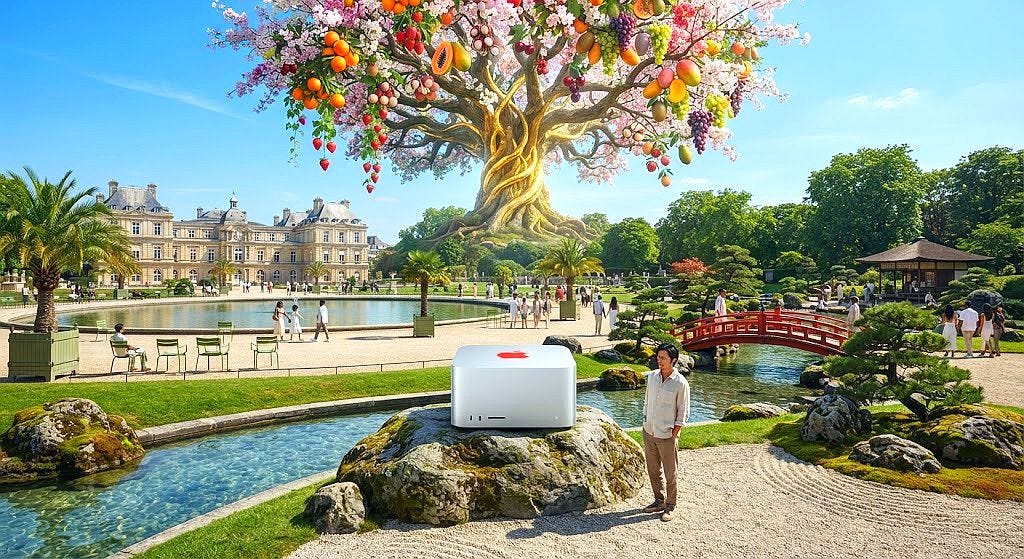
For the first time in a very long while, I thought about the Garden of Eden. I remembered the story from Sabbath school: the tree, the command, the forbidden fruit, and the hand reaching toward the thing that had been declared off-limits. Never again will I want to hear anyone blame Eve for the sins of humanity, because those people have never had an Apple computer sitting in front of them while attempting to practice delayed gratification.
There was no serpent, no tree, and no divine prohibition behind my decision. There was simply a sealed box with something I really wanted inside. The interesting connection was the threshold itself: before the act, possibility remains open; after the act, knowledge arrives.
Before opening the box, the Mac mini could remain whatever I wanted it to be. It could be powerful enough, efficient enough, perfectly suited to my needs, the beginning of a more productive period, and the tool that would finally make my projects possible.
The unopened box protected the fantasy because I had no evidence yet to contradict it. Opening it would produce knowledge: whether 16GB was enough, whether the machine actually improved my workflow, and whether my current hardware was truly the obstacle.
It would reveal whether I had purchased capability or possibility. Before opening, I possessed a promise; after opening, I would possess evidence.
Evidence is dangerous because it can destroy the story that made the purchase attractive. I would no longer be imagining what the machine might do. I would know what it did.
Mustering what remained of my self-control, I put the box away. The popular version of the marshmallow experiment makes delayed gratification sound like heroic resistance, whereas Walter Mischel’s work emphasized the strategies children used to reduce the temptation’s psychological power, including distraction and shifting attention away from the reward.
Sometimes resistance becomes easier when you stop staring at the of your desire. So I put the box away and started looking at previous Mac mini generations.
Regression Analysis as Self-Soothing
The M4 Mac mini had launched in late 2024 with a $599 starting price. By Black Friday 2025, retailers were selling the 16GB/256GB model for $479, while the 16GB/512GB model reached $669. I suddenly had something concrete to examine. Instead of speculating about what might happen to the M6, I could look backward at what had actually happened to the previous generation.
I thought I was doing market research. In reality, I was already working backward from a conclusion I had not fully recognized: waiting was the virtuous choice, and I wanted the evidence to prove it. The prices were real, and they told me something useful about Apple’s previous pricing cycle. I was quietly asking them to establish something much larger: that my restraint had been wise.
There was a little regression happening here, in more ways than one. I was regressing into the past to understand the present, and I was doing the same thing with my reasoning, starting with an answer and working backward toward evidence that could support it. The word even has a faintly ridiculous psychological echo, the sort of “regression” associated with people claiming to recover memories of past lives, which made the whole exercise more revealing than I realized at the time.
I was using analysis to make an emotional position feel empirical. The more evidence I found for falling Mac prices, the easier it became to believe that waiting had been a demonstration of discipline rather than simply one choice among several competing values. I had not yet noticed that I was investigating the market while quietly prosecuting a case for my own virtue.
Temptation as Fear of Loss
There is something psychologically powerful about buying a new piece of technology on the day it becomes available. This is especially true for card-carrying, basement-experimenting, gadget-manipulating technology enthusiasts because the machine is new, other people have barely tested it, reviews are incomplete, and possibility is still larger than evidence.
The unopened box contains the machine, but it also contains the future. My brain immediately went to work on the justifications.
What if Apple raised prices? What if retailers did not discount this model? What if the 32GB version became harder to find, or the configuration I wanted cost more if I waited until December? Maybe waiting was not patience. Maybe waiting was foolish.
The more possibilities I considered, the easier it became to construct a respectable argument for acting immediately. These were genuine concerns, which made them especially effective.
Previous Mac minis had become cheaper during the holiday season, though the circumstances surrounding the M6 had changed. Memory supply was tight, AI infrastructure was placing additional pressure on the market, and component costs could move in the opposite direction from what I wanted. Suddenly, I had a reason to buy and a reason to wait.
The past pointed toward discounts. The present pointed toward scarcity. The future sat somewhere between them, refusing to release its secrets.
I was trying to make a decision using evidence that pointed in two directions, while my desire stood in the middle of the room asking me to choose the interpretation that justified buying the thing I wanted. The evidence did not give me a clean answer. It gave me competing possibilities, and I had to decide which uncertainty I was willing to live with.
I wanted the certainty of having the machine without accepting the ambiguity of whether buying it now was the right decision.
The Evidence
Instead of trying to predict what Apple would do, I looked at what had already happened with previous models. The M4 gave me evidence that holiday discounts were possible, while the current memory market gave me evidence that waiting could carry a cost. Historical evidence pointed one way, present conditions pointed another, and the future remained completely uncooperative.
All I had was information about the past. That is where I began to understand something I had previously treated too casually. We like to imagine that good decisions emerge once we gather enough information, compare enough prices, read enough reviews, consult enough experts, and examine enough data. Eventually, we expect the correct answer to reveal itself.
It does not. Doubt does not disappear because we have more information. Information can improve a decision without removing the need to make one.
The ancient Greeks sometimes turned to oracles when seeking guidance in making a difficult decision. An oracle could transform the unknown into a response. Our modern equivalents include regression analysis, market forecasts, product reviews, analyst reports, recommendation algorithms, spreadsheets, comparison charts, and thousands of strangers telling us what they would do.
The technology is different, but the impulse is familiar. We surround a decision with information because choosing without certainty is uncomfortable and oftentimes costly. Ancient oracles gave answers to people’s most consequential questions. But then and now, we hear what we want to hear, we see what we want to see.
Information helps and matters, yet it cannot make the choice for us. The M4 was not the M6, the past was not the present, and the future had not happened. I still had to decide with incomplete information.
The question was becoming less about finding certainty and more about deciding how much uncertainty I was willing to tolerate.
Return to Sender
I could have kept the machines. I could have told myself that market conditions justified buying immediately and treated the purchase as insurance against a future price increase. Instead, I returned them, took the money back, and decided to wait.
For approximately five minutes, the decision felt principled, then desire reared its head again. This time it came back as fear rather than excitement.
What if I had just made a $2,178 mistake? The machines might be cheaper in December, a Black Friday promotion might make today’s prices look absurd, memory costs might continue climbing, Apple might raise prices, or retailers might decide that strong demand gave them little reason to discount.
I could be standing in a store in December staring at a higher price and thinking, That was a boneheaded move.
Waiting was no longer simply a strategy for saving money. It was an acceptance that waiting might cost me money, and that is the part of delayed gratification that gets left out of the inspirational stories.
Waiting does not guarantee a reward. Sometimes the price rises, sometimes the opportunity disappears, and sometimes the marshmallow is gone when you come back.
The discipline is not a contract with the universe. It is a willingness to act without certainty.
I had unconsciously believed that waiting was virtuous because waiting would eventually vindicate me. But vindication is not virtue. If the Mac became cheaper, I might call myself wise; if it became more expensive, I might call myself foolish.
Either judgment would be hindsight speaking. The decision had been made in September, with incomplete information and competing possibilities.
The future could reveal whether the decision worked out; it could not, by itself, determine whether the decision had been reasonable.
I had been treating delayed gratification as a guarantee when it was actually a gamble with better emotional branding. That realization changed what I thought I was testing.
While I waited, I would acquire information. By December, I would know how the M6 performed in the real world, what users discovered about 16GB versus 32GB, whether 16GB was sufficient for workloads like mine, whether holiday discounts were genuine, and whether the memory shortage had worsened or eased.
I would know what Black Friday actually looked like instead of trying to predict it in September.
That information had value, but information also had an opportunity cost. While I collected it, I would not have the computer, and I was exchanging certainty today for information tomorrow.
Suddenly the experiment had produced another question: how much is certainty worth?
The question was larger than the Mac mini because every meaningful decision contains some version of the same exchange. We want enough information to make uncertainty disappear, even though incertitude is part of the decision itself.
The Experiment That Matters
At this point, the Mac mini became almost incidental. What interested me was what would happen inside my own head over the next few months: whether I would regret returning the machines, obsessively check prices, or react to every headline about rising memory costs by thinking, I should have kept that Mac.
I wondered how I would feel when I saw the prices on Black Friday and Cyber Monday: brilliant, foolish, or something in between. Those reactions were part of the experiment too.
If I had not wanted the machine, walking away would prove nothing. It is easy to resist an object that has no power over you.
The interesting part was discovering how quickly my desire could recruit facts to construct an argument. The hardware limitation was real, the memory-market concerns were real, the historical evidence about Mac discounts was real, and my desire was real too.
None of those facts canceled the others. I had been treating the presence of true facts as proof that the conclusion I wanted was therefore rational.
That is a much more subtle trap than simply lying to yourself. Desire does not always have to invent a fact; sometimes it only has to decide which true facts deserve your attention.
The Real Bet
This is not really a bet about a computer optimized for local AI work. It is a bet about what happens when desire, principle, evidence, unpredictability, and identity collide around something I really want.
I may be wrong about what the market will do. The M6 may cost more at Christmas, the memory shortage may make today’s prices look cheap, or Apple and its retailers may surprise me. Fine. That is part of the experiment.
The issue is whether waiting is always better than buying. Sometimes an immediate purchase makes more sense because the price will rise, the opportunity will disappear, or the tool will produce enough value to justify the cost.
The question is whether the story I told myself about this particular purchase survives contact with reality. I am testing my reasoning, not trying to prove that waiting is inherently virtuous.
I started this experiment thinking I was testing my ability to resist Apple’s shiny new little box. Along the way, I discovered that I was testing something much more difficult: whether I could recognize the stories I tell myself when I really want something.
It is easy to look at someone else’s impulse purchase and see the rationalization. It is much harder to recognize your own.
Desire is perfectly capable of reading the specifications, studying the market, remembering historical prices, identifying a legitimate problem, and presenting a compelling case. Sometimes the argument is even correct.
That does not make the desire disappear, and it does not make the decision irrational. It means that a true argument can still serve a desire, which is why examining the argument requires examining the person making it.
The Mac mini is still an object. The transformation remains hypothetical.
The box may contain a very capable computer, but it does not contain discipline, creativity, persistence, or the person I imagine I will become after buying it. That person has to come out of the box himself.
Perhaps that is the assumption I should have examined from the beginning. My deeper question concerned what I believed the Mac mini would change, rather than what it would actually do
That is a much more dangerous question.
Because once we start looking at the objects we buy that way, we may discover that the most expensive thing we purchase is the story attached to the object.